Our Insulation Options for Oak-Framed Buildings
When designing your oak-framed building, it’s important to remember that insulation plays a key role in how comfortable, efficient, and usable your space will feel. Whether you’re creating a light-use garden room workshop or a full extension for everyday living, the right approach ensures your building works exactly as you need it to, both now and in the years to come.
At English Heritage Buildings, we’ll help you choose an insulation solution that suits your project, your lifestyle, and your long-term plans.
Why Having the Right Insulation Matters in an Oak-Framed Building
With the right insulation in place, your oak-framed building will:
- Stay warmer in winter and cooler in summer
- Reduce heat loss and improve energy efficiency
- Feel comfortable for everyday use, not just occasional use
- Support compliance with Building Regulations where required
There are also important structural considerations. Oak is a natural material, and green oak will gradually settle and adjust over time and as it dries. This means insulation needs to be carefully designed to:
- Minimise areas where heat can escape
- Reduce the risk of moisture or condensation forming
- Work alongside the natural movement of the oak frame
- Ensure long-term durability and performance
This is why a thoughtful, well-informed design must also always be part of the process. By combining traditional craftsmanship with modern precision engineering, we ensure every oak-framed building is designed to perform as well as it looks.
Choosing the Right Insulation Level for Your Project
Every project is different, and the level of insulation you need depends on how you plan to use your building. If you’re building something like a summerhouse, garden workshop, or hobby space, you may simply want to take the chill off. In these cases, a more straightforward insulation option is often sufficient.
On the other hand, if your oak-framed building will be heated, connected to your home, or used daily – such as a garden room, extension, or office – you’ll need a higher level of insulation performance. This ensures comfort, efficiency, and long-term usability.
You can always speak to our team about the option that will suit your needs best. We’ll help guide you towards the most appropriate option based on your plans.
Types of Insulation We Use in Oak-Framed Buildings
There are several ways to insulate oak frame buildings, each suited to different types of projects.
Quilt Insulation
Quilt insulation is a soft, flexible material that is fitted between the rafters and wall structures. It helps slow down heat loss, making the building more comfortable and reducing the impact of colder weather.
It’s typically used and ideal for:
- Garden workshops
- Summerhouses
- Light-use outdoor buildings
Quilt insulation is installed between the structural elements, with breathable membranes added to the roof and walls to help manage airflow and moisture.
Advantages
- Cost-effective solution
- Straightforward to install
- Suitable for occasional-use spaces
Considerations
- Not usually sufficient for fully heated or year-round buildings
- Lower overall performance compared to more advanced systems
Structural Insulated Panels (SIPs)
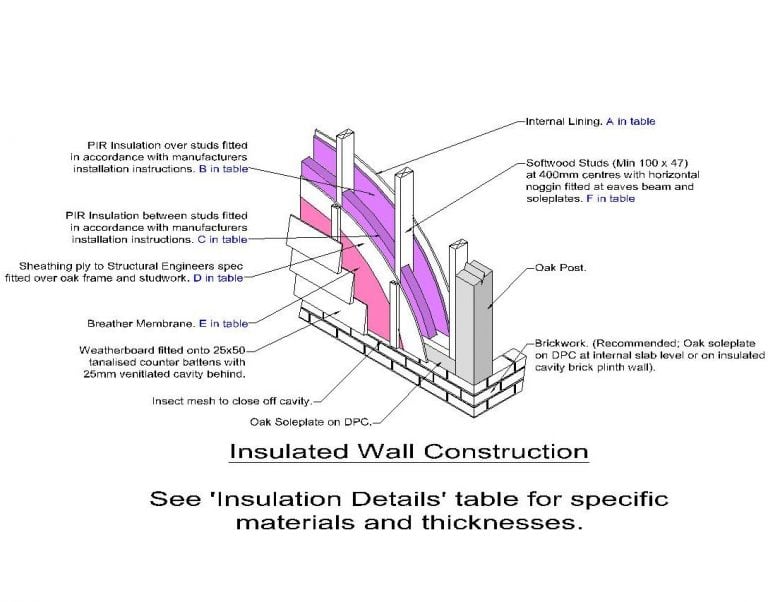
Structural Insulated Panels (SIPs) are a more advanced insulation solution that combines strength and thermal performance. They create a highly insulated outer layer around the oak frame, forming an efficient thermal envelope for the building.
They’re used for:
- Oak-framed extensions
- Garden rooms
- Home offices
- Buildings intended for daily or year-round use
SIPs are positioned on the outside of the oak frame, which also allows more of the natural oak structure to remain visible internally.
Advantages
- Excellent thermal performance
- Helps reduce heat loss significantly
- Supports comfortable, year-round use
- Enhances the visual impact of exposed oak inside
Considerations
- More suited to higher-specification projects
- Typically part of a more detailed design approach
Insulation Within the External Build-Up
Another option is to incorporate insulation between the oak frame and the outer layers of the building. This approach forms part of the overall wall or roof construction, improving thermal performance while allowing flexibility in design.
It’s normally most suitable for bespoke projects and buildings with more tailored structural requirements. It’s fitted so that it’s integrated into the external wall or roof build-up as part of the wider design.
Advantages
- Flexible and adaptable
- Can be designed around your specific building
Considerations
- Requires careful planning and detailing
- Best discussed early in the design stage
What Insulation Allows You to Do With Your Building
With a well-insulated oak-framed building, you can:
- Enjoy your space comfortably throughout the year
- Create a warm and inviting garden room or extension
- Work from home in a dedicated office space
- Use your building for hobbies, entertaining, or relaxing
- Make better use of your property overall
It also supports long-term value, helping your building remain practical, efficient, and enjoyable, potentially for generations, as well as potential buyers and renters should you ever decide to sell or let.
Planning an Oak-Framed Building?
If you’re still exploring your options, you may also find it helpful to look at our guidance on planning, building regulations, and design considerations. Understanding how insulation fits into the wider project can help you make confident, informed decisions from the outset.
Talk to Us About the Right Insulation for Your Project
Every oak-framed building is different, and the right insulation solution depends on how you want to use your space. Whether you’re planning a garden room, extension, garage, or even a bespoke oak-framed house, our team can guide you through the options and help you choose an approach that works for you.
Get in touch today to discuss your project, or request a brochure to continue searching at your leisure. We’ll help you take the next step with clarity and confidence.
